The Tragic Catalyst: Unrest in Lyon
The streets of Lyon, a city renowned for its rich history and vibrant culture, recently became the epicenter of a tragic event that sent shockwaves across France and Europe. The killing of a 23-year-old far-right activist, identified as Deranque, at the hands of alleged hard-left activists, plunged the nation into a renewed debate about political violence and ideological polarization. This incident quickly escalated beyond a local tragedy, igniting a significant lyon protest far right supporters organized, and subsequently triggering a high-stakes diplomatic row.
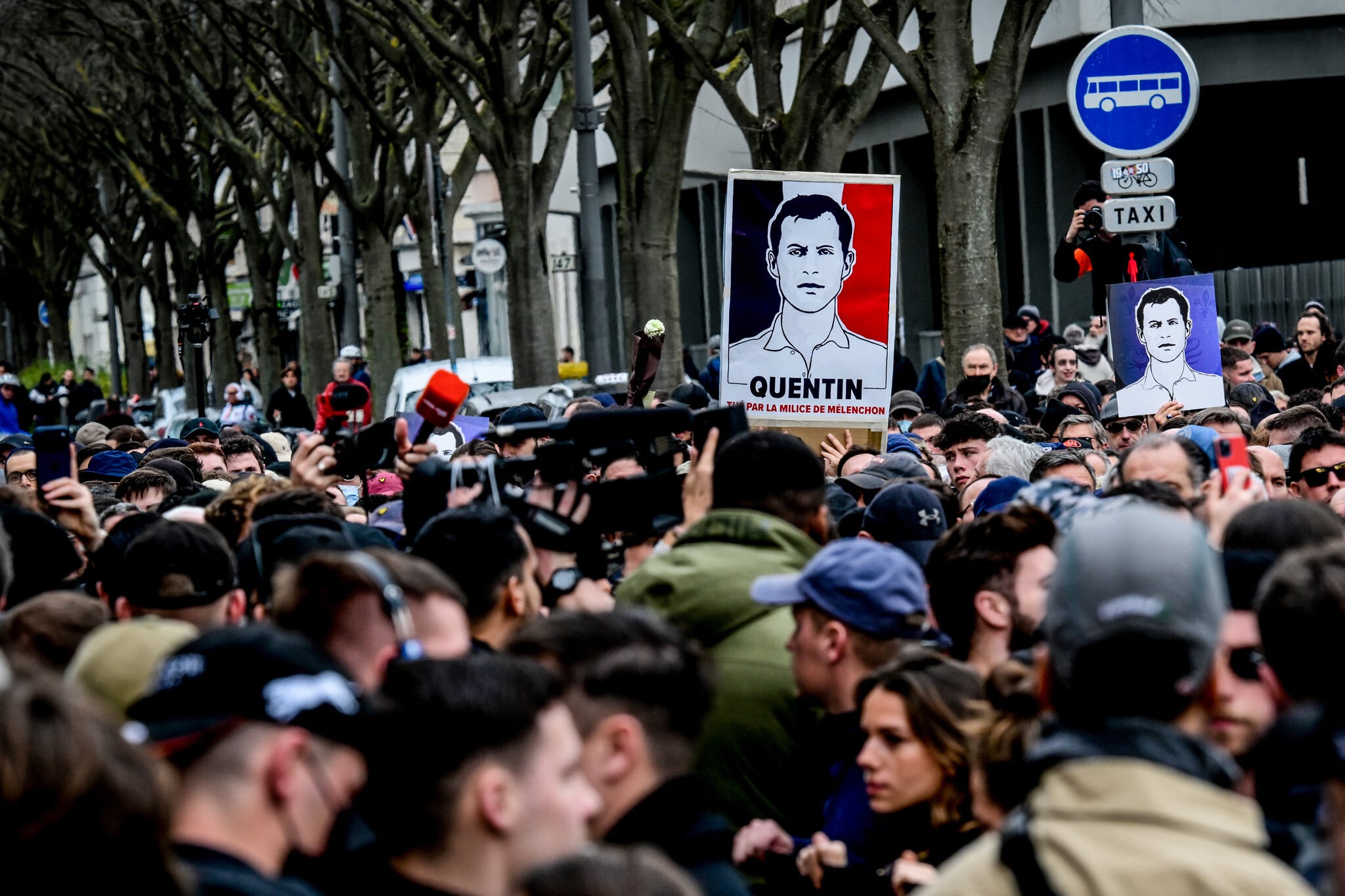
The fatal beating of Deranque during a far-right protest on February 12th was not merely a criminal act; it was a deeply symbolic event in a country already grappling with intense political divisions. In the immediate aftermath, around 3,200 far-right sympathizers rallied in Lyon to honor the slain activist. This demonstration, marked by fervent speeches, banners, and slogans, underscored the raw emotions and growing assertiveness of far-right groups across France. Security forces maintained a strong presence, a necessary measure to prevent further clashes and ensure public order amidst the palpable tension. Such gatherings, while protected under the fundamental right to freedom of assembly, often serve as flashpoints, requiring significant security deployment to prevent further escalation. The challenge for authorities lies in balancing civil liberties with public safety, especially when extremist ideologies are involved.
The judicial response has been swift, with prosecutors announcing that seven individuals, including an assistant to a prominent member of parliament from the far-left France Unbowed (LFI) party, Jacques-Elie Favrot, would face murder charges. Favrot, accused of complicity through instigation, and the other suspects deny the accusations. This development further intensified the political climate, drawing the far-left into the spotlight and exacerbating the deep chasm between France's ideological poles.
A Diplomatic Firestorm: Macron vs. Meloni
What began as a domestic tragedy in France swiftly transformed into an international incident, featuring an unexpected public clash between French President Emmanuel Macron and Italian Prime Minister Giorgia Meloni. Meloni, a leader with roots in Italy's post-fascist movement and a staunch conservative, was the first to weigh in, stating on social media that the killing “by groups linked to left-wing extremism… is a wound for all of Europe.” Her statement, while framed as a broader concern for European stability, was perceived by many as an intervention into French internal affairs.
President Macron’s response was swift and unusually pointed. Speaking to reporters during a trip to India, he fired back, asserting that everyone should “stay in their own lane.” Without explicitly naming Meloni, Macron added, “I’m always struck by how people who are nationalists, who don’t want to be bothered in their own country, are always the first ones to comment on what’s happening in other countries.” When directly asked if his remarks referred to Meloni, Macron confirmed, “You got that right.”
Meloni, in turn, expressed regret, claiming Macron had misinterpreted her comments. “I’m sorry that Macron experienced it as interference,” she told Italian news channel Sky TG24. This exchange laid bare the intricate web of European politics, where national leaders, despite shared EU membership, often prioritize domestic political narratives and ideological allegiances over seamless diplomatic harmony. Macron's sharp rebuke highlighted France's sensitivity to perceived external interference, especially from leaders whose political leanings contrast sharply with his own centrist platform. Meloni's initial comment, on the other hand, could be interpreted as an act of solidarity with fellow European far-right movements, or a strategic move to highlight what she views as the dangers of left-wing extremism, a common theme in conservative rhetoric across the continent.
The incident also sheds light on the evolving relationship between France and Italy, two key European Union members whose leaders often hold differing views on critical European issues, from migration to economic policy. While diplomatic disagreements are not uncommon, a public spat of this nature underscores the deep ideological fissures that can easily transcend national borders.
France's Deepening Political Divide and European Implications
Domestically, the killing in Lyon has jolted France’s political class, reigniting fierce debates about political violence and further fuelling tensions between the far-right and far-left. The timing is particularly sensitive, coming ahead of crucial municipal elections in March and, more significantly, the presidential race in 2027. Opinion polls currently suggest the far-right is in a strong position for the 2027 presidency, a contest President Macron will be unable to join after serving his maximum two consecutive terms.
The involvement of an assistant to an LFI lawmaker in the alleged murder plot has added another layer of complexity and political ammunition to the far-right, enabling them to frame the incident as a clear instance of left-wing extremism. This narrative plays directly into the broader European trend of rising populist and far-right movements challenging traditional political establishments. Across Europe, from Italy to Sweden, and increasingly in France, these movements are gaining traction by tapping into public anxieties over immigration, economic insecurity, and cultural identity.
The incident in Lyon, therefore, is not an isolated event but a microcosm of broader European trends. It highlights the growing polarization and the decreasing tolerance for differing political views that characterize contemporary European societies. The ease with which a local tragedy can morph into an international diplomatic row involving leaders with contrasting ideologies underscores the fragility of political discourse in an increasingly interconnected world. For more on the internal French dynamics, especially concerning the impact of this event on upcoming elections, see France's Political Divide: Lyon Unrest Jolts Nation Ahead of 2027 Elections.
Navigating Polarization: Insights for Citizens and Policymakers
The events surrounding the lyon protest far right and the subsequent diplomatic row offer critical insights for both citizens and policymakers striving to navigate an increasingly polarized world. The escalation from a street-level confrontation to an international incident underscores the urgent need for strategies that promote dialogue, de-escalation, and robust legal processes.
Practical Tips for Citizens:
- Critically Evaluate Information: In an era of rapid information dissemination and social media echo chambers, distinguishing fact from rhetoric becomes paramount. Seek diverse news sources and challenge your own biases.
- Engage Respectfully: While passionate political engagement is vital for democracy, it must be tempered with respect for differing viewpoints. Avoid inflammatory language and seek common ground where possible.
- Support Local Journalism: Robust, independent journalism plays a crucial role in providing accurate context and holding power accountable, helping to counteract misinformation.
- Participate Constructively: Channel political energy into constructive avenues, such as community organizing, peaceful advocacy, or supporting political candidates who promote unity and responsible governance.
Insights for Policymakers:
- Condemn All Forms of Political Violence: Leaders must unequivocally denounce violence from any political spectrum, emphasizing that democratic processes, not physical confrontation, are the legitimate means of political expression.
- Strengthen Democratic Institutions: Investing in impartial judicial systems and ensuring fair electoral processes are crucial to maintaining public trust and reducing grievances that can fuel extremism.
- Promote Inclusive Dialogue: Create platforms for cross-ideological dialogue and debate, fostering an environment where disagreements can be aired and resolved peacefully, rather than erupting into conflict.
- Regulate Digital Spaces Responsibly: While respecting free speech, governments and tech companies must collaborate to address the spread of hate speech and incitement to violence on social media platforms that often exacerbate real-world tensions.
For a deeper dive into the immediate aftermath and rallies, including firsthand accounts of the demonstrations, explore Lyon Protests: Far-Right Rallies After Activist's Killing Fuels French Tensions.
Conclusion
The tragic incident in Lyon, from the senseless loss of life to the subsequent lyon protest far right demonstrations and the European diplomatic fallout, serves as a potent microcosm of broader trends across the continent. It highlights the dangerous implications of escalating political polarization, the challenges of maintaining national sovereignty in an interconnected Europe, and the persistent rise of extremist movements. The public spat between Macron and Meloni underscores the ideological chasm that increasingly defines European politics, revealing how quickly domestic incidents can reverberate across borders. As France braces for critical elections and Europe continues to grapple with its identity and future, the events in Lyon stand as a stark reminder of the urgent need for dialogue, mutual respect, and a steadfast commitment to democratic principles to prevent further division and violence.